


Suspension Repair: Costs, Symptoms & Solutions
Your car's suspension system plays a major role in how smoothly and safely your vehicle handles the road. Every pothole, speed bump, and highway expansion joint passes through it before it ever reaches you. When it starts to fail, it doesn't just cost you comfort—it also affects handling, braking distance, and tire life.
What Is Your Vehicle Experiencing?
Select your vehicle's symptom below to instantly uncover the likely mechanical cause, severity, and recommended technical next step:
Symptom: Bouncy, floaty ride
Moderate UrgencyWorn shocks or struts
Internal hydraulic valving has lost damping resistance or fluid has leaked out.
Replace shocks or struts in axle pairs.
What Is Suspension Repair?
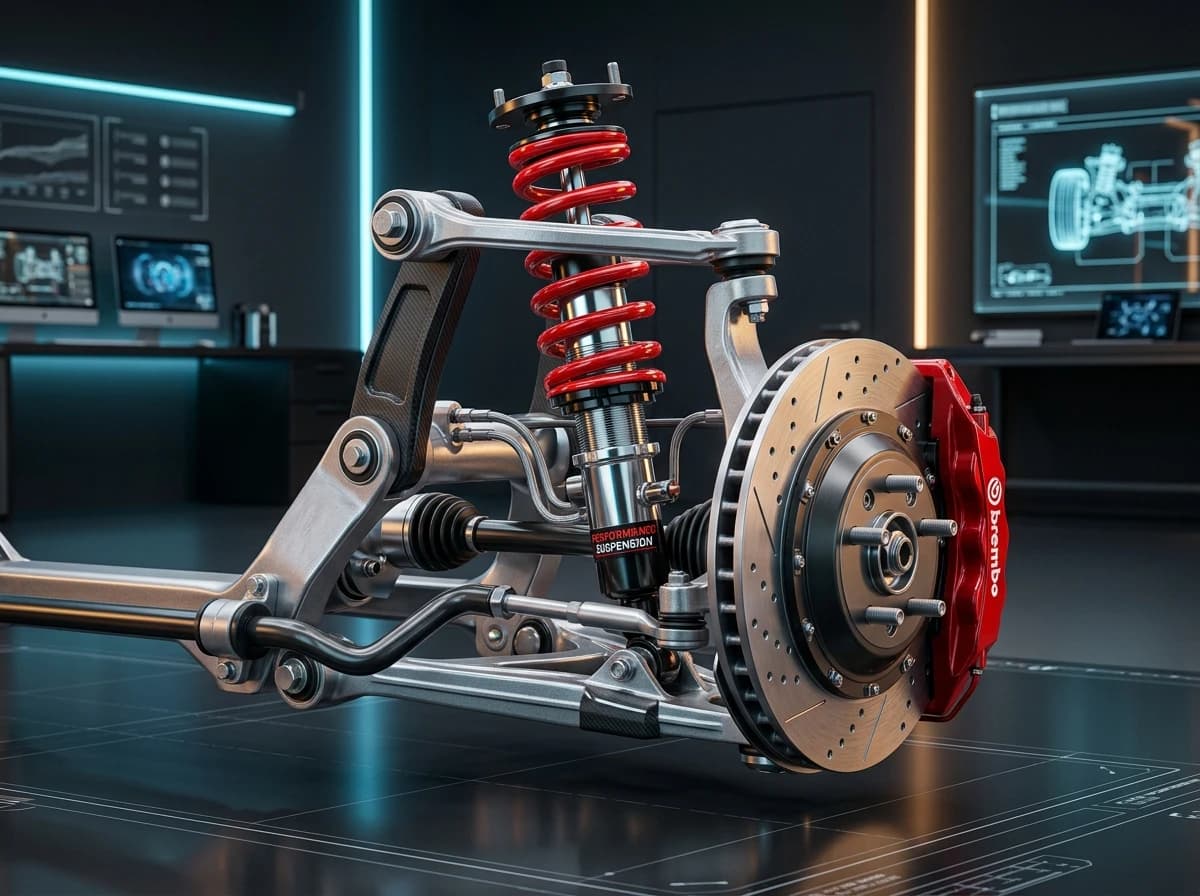
Suspension repair refers to the diagnosis, replacement, or restoration of any component in your vehicle's suspension system—the network of springs, shocks, struts, control arms, bushings, and linkages that connects your wheels to the vehicle frame.
1. Absorb Road Impact
Dampens and dissipates road shocks from potholes, cracks, and bumps so jarring vibrations do not compromise vehicle stability or cabin comfort.
2. Consistent Tire-Road Contact
Keeps all four tires firmly planted against the asphalt during accelerating, emergency braking, and sharp turns for maximum grip.
Components vary between independent vs. solid axle systems, coilovers, and air suspension setups, but their core mechanical duty remains identical: keeping your car controllable and safe.
Signs You Need Suspension Repair
Most suspension problems don't appear overnight—they build gradually, which is why so many drivers ignore them until handling becomes hazardous:
Excessive Bouncing
Bouncing continuously after hitting a bump. Indicates worn shocks or struts losing hydraulic damping resistance.
Clunking or Knocking
Audible metallic thuds over bumps or during turns caused by worn bushings, sway bar links, or ball joints.
Uneven Tire Wear
Cupping (scalloped dips) or feathering tread patterns created when tired suspension bounces irregularly.
Vehicle Pulling
Car drifting to one side during straight cruising or braking due to geometry misalignment or a collapsed strut.
Nosediving / Squatting
Nosediving forward when braking or squatting in the rear when accelerating hard due to failed rebound control.
Noticeably Rougher Ride
Every tiny road seam and pebble reverberates directly into the passenger cabin without cushioning.
Visible Fluid Leaks
Hydraulic damping oil visibly weeping or dripping along the exterior metal body of shocks or struts.
Steering Play / Vibration
Steering wheel feels unusually loose, wander-prone, heavy, or vibrates noticeably at highway cruising speeds.
Common Suspension Problems and Their Causes
These issues rarely stay isolated. A worn bushing accelerates wear on nearby ball joints and control arms, which is why early diagnosis saves substantial money in the long run:
| Problem | Likely Mechanical Cause | Severity |
|---|---|---|
| Bouncy, floaty ride | Worn shocks or struts | Moderate |
| Clunking over bumps | Worn bushings, sway bar links, or ball joints | High |
| Pulling to one side | Misalignment, uneven tire pressure, or a failing strut | Moderate |
| Sagging on one corner | Broken or weak coil spring | High |
| Vibration at speed | Worn control arm bushings or CV joint issues | Moderate |
| Steering wander | Worn tie rod ends or steering rack issues | High |
How Much Does Suspension Repair Cost?
Actual pricing depends on make, model, region, and whether you use a dealership, independent shop, or do it yourself. Here are national U.S. average ranges (parts & labor combined):
Shock / Strut Pair
Replacement of front or rear shock absorbers or strut assemblies.
- Economy & Midsize Cars$150 – $500
- Trucks, SUVs & Luxury$300 – $900+
- Hardware & Mounting KitsIncluded
Full Overhaul
Comprehensive restoration of all worn springs, shocks, bushings, and links.
- Springs & Shocks ReplacementFull Set
- Control Arms & BushingsRestored
- Sway Bar End Links & JointsInstalled
Wheel Alignment
Essential calibration after any suspension work. Skipping it wears out new parts fast.
- Standard 4-Wheel Align$75 – $140
- Tire Life Preservation100% Critical
- Straight Steering CalibrationGuaranteed
Shocks, Struts, and Suspension Parts
Shocks and struts are the components most people mean when they say "suspension," but they're only part of the complete chassis assembly:
Coil Springs & Leaf Springs
Support full vehicle weight and absorb large road impacts.
Control Arms & Bushings
Connect the wheel hubs to the frame while pivoting smoothly.
Sway Bars & Links
Prevent body roll during cornering to keep the chassis flat.
Ball Joints
Act as pivot points between control arms and steering knuckles.
Tie Rod Ends
Transmit steering force from the rack directly to each front wheel.
Air Suspension Components
Pneumatic air bags and compressors on premium vehicles.
Suspension vs. Wheel Alignment vs. Steering
These three get confused constantly, and shops sometimes bundle them. Here is exactly what each service addresses:
Absorbs Impact
Fixes the physical components that absorb road shocks and support vehicle weight (springs, shocks, struts, control arms, and bushings).
Adjusts Angles
Adjusts wheel geometry angles (camber, caster, toe) relative to each other and the road surface. Protects new parts and tires.
Directional Control
Addresses the mechanical rack, pinion, and linkages that turn the wheels. Shares symptoms like wheel vibration and pull.
DIY vs. Professional Suspension Repair
Some suspension jobs are great for garage enthusiasts, while others carry severe physical safety risks:
Realistic for DIY
Shock absorber replacement on many vehicles is a straightforward bolt-on job with basic hand tools and jack stands. Sway bar links are also commonly serviceable at home.
Requires a Professional
Anything involving coil spring compression carries extreme safety risk if done without industrial strut compressors. Wheel alignments and air suspension calibrations also require pro shop equipment.
Suspension Repair by Vehicle Type
Suspension architectures and failure patterns differ meaningfully across vehicle categories:
Passenger Cars & Sedans
Generally use simpler strut-based front suspension with predictable wear patterns tied to mileage and city potholes.
Trucks & SUVs
Carry heavier loads and tow trailers, which dramatically accelerates wear on control arms, leaf springs, and heavy-duty rear shocks.
Luxury Vehicles
Increasingly feature air suspension for an ultra-plush ride, but command higher repair bills when air compressors or air struts fail.
How to Prevent Premature Suspension Wear
Suspension components wear out eventually regardless of care, but you can extend their lifespan significantly:
Inspect at Every Tire Rotation
Get a quick visual suspension check every 10,000–12,000 miles during routine service.
Address Small Noises Early
Fix minor squeaks early instead of waiting for them to worsen into structural failures.
Avoid Vehicle Overloading
Never exceed your car's rated payload capacity to prevent bottoming out and blown dampers.
Always Replace in Axle Pairs
Swap both front or both rear units together to maintain even damping and safe handling.
Monitor Tire Tread Patterns
Uneven wear patterns serve as the earliest warning sign of hidden suspension failure.
Got Questions About Suspension Repair?
Find quick answers to common questions about safety, repair intervals, and component replacement:
Common indicators include excessive bouncing after a bump, clunking noises, uneven tire wear, and the vehicle pulling to one side. A simple at-home bounce test (pressing down firmly on a corner of the car) can raise a flag, but it isn't conclusive on its own—a professional chassis inspection is the only reliable way to confirm which specific component is failing.